
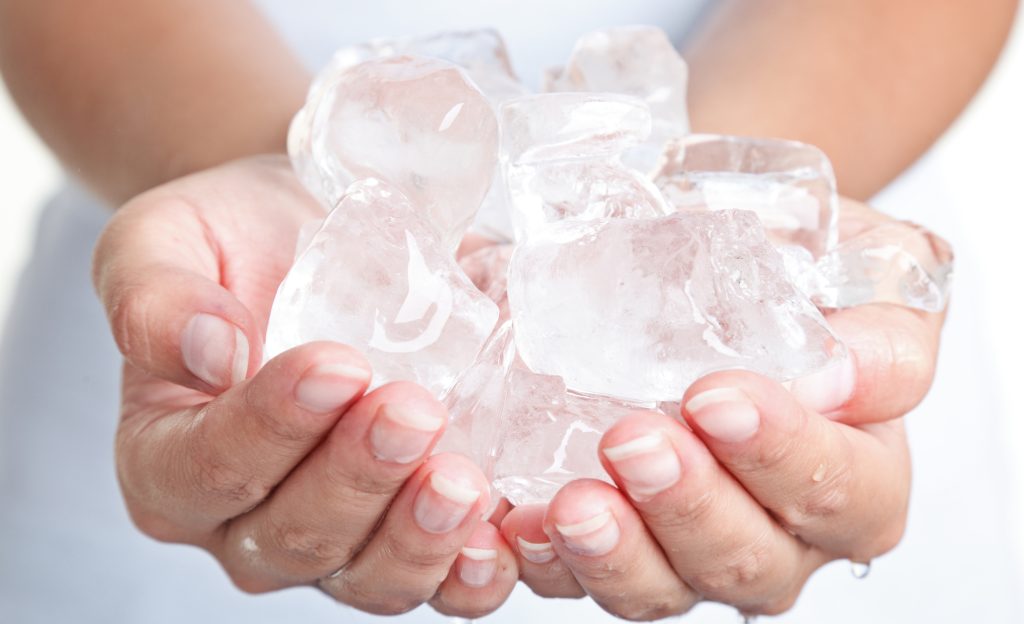
Whether you’re enjoying an exceptional drink at home or you’re trying to impress party guests, the right ice cube can make a big difference. The perfect ice cube is crystal clear, tastes pure, doesn’t stick to other cubes, and has the right shape and size for its intended use. So, how can you get a perfect ice cube? Let’s dive into the science behind each of these factors and explore how you can achieve the ideal ice cube.
How to Get a Perfect Ice Cube, According to Science
Clarity: How to Get Crystal-Clear Ice
First, let’s start with the most immediately noticeable factor of your ice cube; it’s visual appearance. One of the most noticeable differences between a high-quality ice cube and an average one is its clarity. Standard home freezer ice cubes often look cloudy because of trapped air bubbles and impurities. To get the perfect ice cube, you’ll need a crystal-clear cube. It can be difficult, but it’s possible.
The key to clear ice is controlling how the water freezes. In nature, freezes from the top down, pushing air and impurities to the bottom. Replicating this process can produce crystal-clear cubes. Of course, using pure water without impurities also makes a big difference.
To get clear ice:
- Use purified or distilled water: Minerals and dissolved gases contribute to cloudiness.
- Boil the water before freezing: Boiling water removes dissolved air, making it easier for the ice to freeze uniformly.
- Use directional freezing: Ice makers in high-end bars and restaurants freeze water from the top down, allowing impurities to settle at the bottom, which can then be discarded. A simple way to do this at home is to freeze water in an insulated container with the top exposed.
Twice the Ice vending machines use purified water and a careful freezing process to produce clean, refreshing ice cubes in bulk
Use ICE2U to find your nearest ice vending machine >>
Taste: The Importance of Water Quality

Though the appearance of the ice cube is the first thing you notice immediately, taste may be the most important attribute of the perfect ice cube. Since ice melts into your drink, it can affect the flavor. The best ice is made from clean, fresh-tasting water with a balanced pH. If your tap water has a metallic or chlorine taste, your ice will too.
To improve ice taste:
- Use filtered or distilled water: This removes chlorine, minerals, and other impurities.
- Adjust pH if needed: Water that is too acidic or alkaline can leave an off taste in ice. A pH level around 7 (neutral) is ideal.
- Store ice properly: Ice cubes can absorb odors from the freezer. Keeping them in a sealed container helps maintain freshness.
Twice the Ice machines make ice fresh for each customer
Find your nearest ice vending machine >>
Shape and Size: The Right Balance
Not all ice cubes are created equal, and their shape and size affect how they look and function in a drink. Large cubes melt more slowly since they expose less surface area compared to volume. The shape of the ice cube also impacts how the ice melts. This is why cocktail bars often use large square or spherical ice cubes for whiskey and cocktails. Smaller cubes or crushed ice, on the other hand, are ideal for blended drinks or drinks meant to be consumed quickly.
There are all types of ways to freeze ice, and which is perfect will depend on what you’re using it for and what you prefer. If you’re hosting a party, for example, you might prefer ice with fun shapes, like hearts or flowers. In general, the following ice shapes are best for the following types of drinks:
- Large cubes: Best for whiskey, cocktails, spirits, and some non-alcoholic cocktails.
- Standard cubes: Good for everyday drinks like soda or iced coffee.
- Crushed ice or nugget ice: Ideal for frozen drinks, smoothies, or soft drinks where fast cooling is desired.
- Cylindrical or gourmet ice: Often used in high-end restaurants and bars, these cubes are designed to melt slowly while looking elegant.
Preventing Ice Cubes from Sticking Together

Ice that sticks together can be difficult to work with, whether you’re making an elegant cocktail or simply icing a party punch. This happens when ice partially melts and refreezes, forming a solid mass. The key to preventing this is maintaining a stable freezing temperature.
To keep ice cubes separate:
- Store ice in a low-humidity environment: Freezer moisture can cause melting and refreezing.
- Keep your freezer temperature consistent: Frequent opening and closing of the freezer door can cause temperature fluctuations, leading to partial melting.
- Use an airtight container: This prevents exposure to warm air and moisture, reducing the chance of cubes sticking together.
Extra Tips to Make the Perfect Ice Cube
Beyond clarity, taste, shape, and storage, a few other elements contribute to the science of great ice:
- Freezing speed: Slow freezing reduces trapped air and creates clearer ice.
- Mineral content: Hard water with high mineral content can create cloudy ice and leave residue in ice makers.
- Surface texture: Smooth, well-formed cubes melt more evenly than rough or chipped ice.
The perfect ice cube is a blend of science and technique. Whether you’re a home mixologist or just want better ice for everyday drinks, understanding the science behind ice can elevate your beverages. To get delicious, fresh, easy-to-work-with ice cubes for a party or for your freezer, download the ICE2U app to find your closest Twice the Ice vending machine.